

At EMACO GLOBAL, we are committed to providing premium fire safety solutions that combine reliability, durability, and performance. One of our leading offerings in the firefighting equipment range is the Lexus Hose, also known as the Nitrile Rubber Hose. Engineered with advanced technology and built to meet the toughest international standards, this hose is specifically designed to withstand extreme conditions while ensuring consistent water flow in emergency scenarios.
Our Lexus Hose / Nitrile Rubber Hose represents the next generation of firefighting hoses—lightweight, abrasion-resistant, and manufactured to deliver outstanding service life for municipal, industrial, and specialized firefighting applications.
What is a Nitrile Rubber Hose?
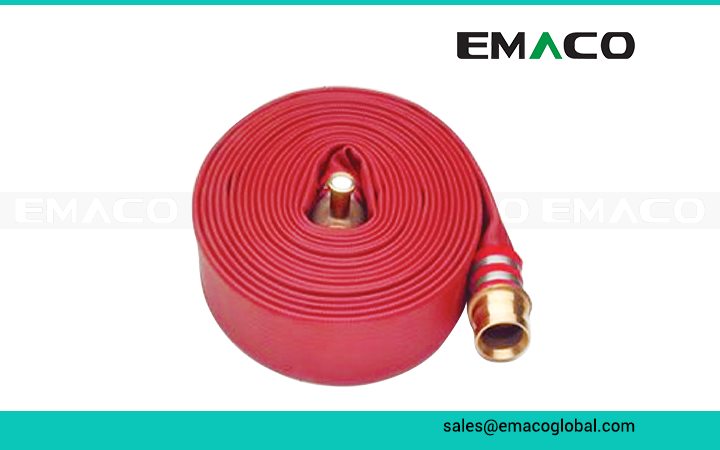
A nitrile rubber hose is a type of fire hose covered with nitrile/PVC blend rubber that provides excellent resistance to abrasion, oil, chemicals, and extreme weather conditions. Unlike traditional hoses with separate outer jackets and liners, the Lexus Hose is manufactured using a unique extrusion process that permanently bonds the nylon 6.6 reinforcement to the nitrile rubber cover and liner.
This results in a durable, one-piece hose construction (Type 3 hose) that not only reduces maintenance but also ensures consistent performance in challenging firefighting environments.
Technical Specifications of Lexus Hose
To ensure customers receive a clear technical understanding, here are the details of our Lexus Hose / Nitrile Rubber Hose:
- Model: EN0121
- Approval: Standard compliant with UL19, NFPA, FM, and BS6391
- Cover and Tube: Nitrile/PVC blend tube
- Reinforcement: High-strength synthetic yarn
- Standard Length: 15m (50ft) to 30m (100ft)
- Color: Red (standard); other colors available upon request
- Hose Standard: Meets or exceeds UL19, NFPA, FM, and BS6391 performance standards
This robust technical foundation makes the Lexus Hose highly adaptable for both municipal water supply operations and industrial firefighting environments.
Key Features of the Lexus Hose
- One-Piece Construction: The nitrile/PVC cover is extruded through the reinforcement, creating a unified hose structure.
- Superior Abrasion Resistance: Withstands rough surfaces, dragging, and outdoor use without damage.
- Chemical & Oil Resistance: Suitable for environments where exposure to chemicals, fuels, or oils is common.
- UV & Ozone Resistant: Maintains flexibility and strength even in prolonged sunlight and outdoor storage.
- Low Friction Loss: Ensures efficient water delivery, crucial in emergency response.
- Ease of Handling: Lightweight yet durable, allowing firefighters to deploy the hose quickly.
- Long Service Life: Reduced wear and tear ensure excellent return on investment.
Applications of Lexus Hose / Nitrile Rubber Hose
The nitrile rubber hose is widely used across industries due to its versatility:
Municipal Firefighting
- Ideal for urban firefighting, where hoses are dragged across rough asphalt and concrete.
- Long-lasting hose solution for repeated use by fire brigades.
Industrial Firefighting
- Suitable for oil refineries, petrochemical plants, warehouses, and factories.
- Resistant to oils and industrial chemicals, making it more reliable than traditional hoses.
Water Supply & Transfer
- Large diameter hoses provide an uninterrupted water supply for municipal and industrial requirements.
- Used in pumping stations, construction sites, and irrigation projects.
Military & Marine Applications
- Strong construction makes it a dependable choice for naval vessels, ports, and defense installations.
- Resistant to saltwater and marine conditions.
Premium Fire Protection Systems
- Deployed in high-value facilities such as airports, data centers, and power plants where hose reliability is critical.
Advantages of EMACO GLOBAL’s Lexus Hose
When choosing the Lexus Hose from EMACO GLOBAL, customers benefit from:
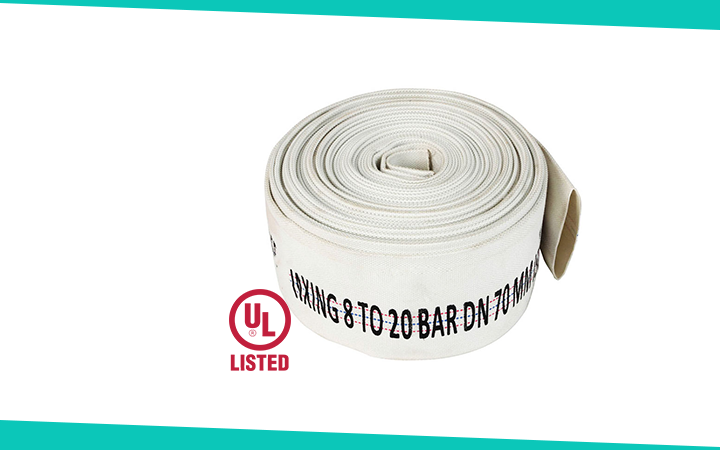
- Compliance with International Standards: UL19, NFPA, FM, and BS6391 certified.
- Customization Options: Available in multiple sizes and lengths as per client requirements.
- Enhanced Safety: Engineered for high-pressure environments, reducing failure risk.
- Durability in Harsh Environments: Performs in both extreme heat and freezing temperatures.
- Low Maintenance Costs: Long service life reduces replacement frequency.
- Trusted Brand Support: Backed by EMACO GLOBAL’s expertise and after-sales service.
Why Choose EMACO GLOBAL for Nitrile Rubber Hoses?
At EMACO GLOBAL, we understand that firefighting equipment must perform flawlessly under pressure. That’s why we invest in:
- Stringent Quality Control: Every Lexus hose undergoes rigorous testing before shipment.
- Global Certifications: Ensures our hoses are internationally recognized for safety and performance.
- Technical Expertise: Our team provides consultation to help clients choose the right hose for their specific application.
- Comprehensive Product Range: From hoses to reels, monitors, valves, and foam systems—we deliver complete fire safety solutions.
By selecting EMACO GLOBAL, clients receive not just a hose, but a premium firefighting solution designed for maximum efficiency and reliability.
Maintenance and Handling Guidelines
Proper maintenance and correct handling practices significantly extend the service life of nitrile rubber hoses while ensuring safety and reliability in demanding environments. To achieve optimal performance, users should adopt the following guidelines:
- Regular Inspection:
Conduct routine visual checks for cracks, abrasions, cuts, or surface swelling caused by exposure to harsh chemicals, extreme temperatures, or mechanical stress. Early detection helps prevent sudden failures. - Cleaning Practices:
Always clean hoses after use, especially if they have been exposed to fuels, oils, or corrosive chemicals. Use mild soap solutions or recommended cleaning agents, avoiding harsh solvents that may degrade the rubber compound. - Proper Storage:
Store hoses in a cool, dry, and shaded area, away from direct sunlight, ozone sources, or equipment that emits high heat. Coiling them loosely without sharp bends prevents internal stress and deformation. - Handling Precautions:
Avoid dragging hoses across rough surfaces, kinking them sharply, or placing heavy loads on top of stored coils. Use hose reels or guides when possible to reduce wear and tear during operation. - Pressure and Temperature Monitoring:
Ensure the hose is always operated within the manufacturer’s specified pressure and temperature ratings. Over-pressurization or extreme heat exposure can cause premature failure and pose serious safety risks. - End-Fitting Checks:
Inspect hose couplings and fittings regularly for corrosion, loosening, or leakage. Properly secured fittings maintain airtight connections and improve the hose’s overall efficiency.
By adhering to these best practices, businesses can reduce downtime, extend the hose’s service life, and maintain compliance with industrial safety standards.

Frequently Asked Questions (FAQs)
- What makes nitrile rubber hoses suitable for industrial use?
Nitrile rubber hoses are highly resistant to oils, fuels, and chemicals, making them ideal for industries like petrochemicals, automotive, aviation, and manufacturing. Their durability ensures reliability even in harsh working conditions. - Can nitrile rubber hoses withstand extreme temperatures?
Yes. These hoses typically operate effectively within a temperature range of -40°C to +100°C, though certain reinforced variants can tolerate higher peaks. Always check the manufacturer’s specifications for the specific model. - How often should nitrile rubber hoses be replaced?
Replacement frequency depends on usage intensity and working environment. Under normal operating conditions with regular maintenance, hoses can last 3–5 years. However, early replacement is recommended if cracks, bulges, or leaks are observed. - Are nitrile rubber hoses flexible enough for tight spaces?
Yes, one of their advantages is high flexibility, which allows installation in compact or curved systems without compromising flow performance. - Can these hoses be used for both suction and discharge applications?
Absolutely. Reinforced nitrile hoses are designed to handle both suction and discharge operations, making them versatile for fuel transfer, hydraulic systems, and fluid transport. - Do nitrile rubber hoses require special storage conditions?
They should be stored in a dry, cool, and UV-protected environment. Exposure to sunlight, ozone, or extreme humidity can degrade rubber compounds over time. - What industries benefit the most from nitrile hoses?
Industries such as oil & gas, automotive, aviation, agriculture, mining, and chemical processing rely on nitrile hoses for their resistance to oils, fuels, and abrasives. - Are nitrile rubber hoses environmentally friendly?
While not biodegradable, nitrile hoses are recyclable. Many manufacturers now incorporate eco-conscious practices to reduce environmental impact. - Can damaged hoses be repaired?
Minor surface abrasions can sometimes be patched, but structural damages like splits or weakened reinforcements require complete replacement to ensure safety. - How do nitrile hoses compare with other hose materials?
Compared to PVC or neoprene hoses, nitrile offers superior oil, fuel, and abrasion resistance, though it may be less resistant to ozone and weathering unless properly treated.


