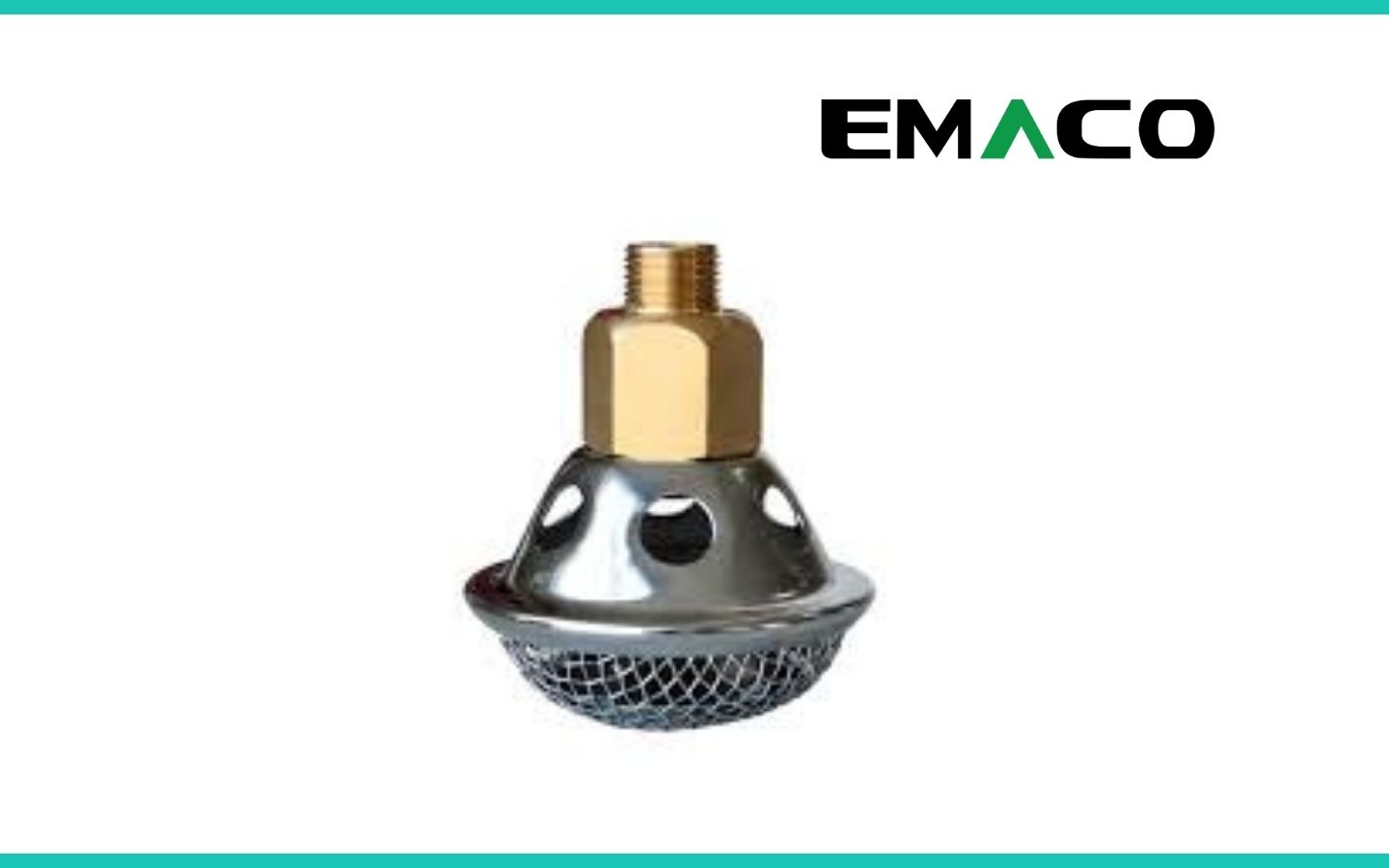
The EMACO Foam Maker is a specialized foam-generating device used in storage-tank fire protection systems, particularly for floating-roof tanks where vapour accumulation around the seal area can create high fire risk. Operating as a Type II discharge device, the Foam Maker produces aspirated, low-expansion foam by mixing foam solution with induced air.
Available in both carbon steel and stainless steel constructions, the EMACO Foam Maker is UL Listed and engineered to deliver stable performance under varying pressure conditions. Its flanged inlet design allows easy integration into fixed-piping systems, while its optimized internal geometry ensures consistent air induction and high-quality foam generation.
Suitable for refineries, fuel terminals, petrochemical facilities, and industrial plants, the EMACO Foam Maker is a dependable component for vapour-suppression and seal-fire protection systems.
Key Features
The EMACO Foam Maker is engineered to provide controlled, gentle foam application to protect the seal area of floating-roof tanks from ignition sources and vapour release.
Foam Makers play a critical role in the fire protection of floating-roof storage tanks, where even minor vapour leaks around the annular seal can present significant fire hazards. Installed on the foam line leading to the tank-seal area, the Foam Maker converts foam solution into aspirated foam by mixing it with air drawn through the device.
The EMACO Foam Maker is specifically designed to meet the performance requirements of NFPA 11 for low-expansion foam application. Its purpose is to produce stable, uniform foam that spreads across the seal area, forming a protective blanket that cools surfaces, suppresses vapours, and helps extinguish any developing fire.
Each Foam Maker is built for long-term service, offering consistent operation even after prolonged periods of storage or exposure to outdoor industrial environments.
Foam Solution Supply
Foam concentrate is proportioned into the water stream using a bladder tank system, inline inductor, or other proportioning equipment. This foam solution is then delivered to the Foam Maker via the fixed piping network.
Air Induction
As the foam solution passes through the Foam Maker’s calibrated orifice, a venturi effect is created. This draws ambient air in through the air inlet or strainer to aerate the foam solution.
Foam Generation
The incoming air mixes thoroughly with the foam solution within the device, forming an aspirated low-expansion foam with a stable bubble structure.
Foam Discharge
The generated foam exits the Foam Maker through the outlet and enters a foam pourer or similar discharge device, where it is gently introduced into the tank seal area.
Controlled, Gentle Application
The foam is applied in a controlled manner to avoid disturbance of the liquid surface, ensuring effective vapour suppression around the floating-roof seal.
This process ensures continuous foam quality and stable performance during emergency operations.
| MODEL | APPROVAL | MATERIAL | WORKING PRESSURE | INLET X OUTLET SIZE |
| E0303- M50 | UL/FM | Carbon-Steel | 40psi (3bar) min. 100psi (7bar) max. | 2’’ x 3’’ (50mm x 80mm) |
| E0303-M65 | UL/FM | Carbon-Steel | 2.5’’ x 4’’ (65mm x 100mm) | |
| E0303- MS50 | UL/FM | Stainless Steel | 2’’ x 3’’ (50mm x 80mm) | |
| E0303-MS65 | UL/FM | Stainless Steel | 2.5’’ x 4’’ (65mm x 100mm) |
Floating-Roof Storage Tanks
Primarily designed for protecting the seal area of external floating-roof tanks containing flammable liquids.
Petroleum & Fuel Storage Terminals
Provides reliable foam discharge to prevent vapour ignition in high-risk fuel-handling facilities.
Refineries & Petrochemical Plants
Used to protect critical tank farms and storage zones where hydrocarbon vapours are present.
Industrial Chemical Storage
Effective for tanks that store solvents, chemicals, or volatile liquids requiring foam-based fire suppression.
Fixed & Semi-Fixed Foam Systems
Compatible with bladder tank systems, inline inductors, and other proportioning units in fixed foam setups.
Hazardous Storage Zones
Provides reliable seal-fire protection in areas where vapours must be contained and controlled during emergencies.
Periodic Inspection
Inspect for physical wear, blockage at the air inlets, corrosion, or buildup of contaminants that may affect airflow.
Cleaning of Air Inlets
Air strainers or inlets should be periodically cleaned to maintain efficient air induction for proper foam formation.
Pressure Testing
Verify that the system supplies adequate pressure (within the 40–100 psi range) to ensure proper foam generation.
Foam Quality Check
During system testing, confirm that foam expansion and consistency meet the required performance standards.
Coating and Corrosion Protection
If installed outdoors, maintain or restore the epoxy coating as needed to prevent corrosion over time.
Component Replacement
Seals, gaskets, and fasteners may require replacement after long-term service or exposure to corrosive environments.
Routine checks ensure the Foam Maker performs reliably during emergency activation.
UL-Listed Assurance
Certified to international safety and performance standards, ensuring system reliability during fire incidents.
Consistent Foam Quality
Optimized air-aspirating design delivers controlled expansion and uniform bubble structure.
Strong Material Options
Choose between carbon steel or stainless steel depending on environmental conditions and system requirements.
Easy Integration
Standardized flanges and compact design make installation simple within fixed foam-piping systems.
Low Maintenance
Minimal moving parts and a corrosion-resistant finish ensure long service life with limited maintenance needs.
Engineered for Tank-Seal Protection
Specifically designed to protect floating-roof tanks where vapour suppression is critical.
With proper maintenance, the EMACO Foam Maker can remain operational for more than a decade, even in challenging industrial environments. Its durable construction, high-quality components, and corrosion-resistant coatings ensure long-term stability and dependable foam generation.
Stainless steel variants offer enhanced resistance to corrosion, making them ideal for coastal, chemical, or high-humidity environments. Regular inspection and cleaning of air inlets can significantly extend the device’s service life and maintain its performance during emergencies.
Explore complete product specifications, compliance details, and installation information.
Q: What exactly is Foam Maker — how does it work?
A: Foam Maker is essentially an air-aspirating generator. During operation, the foam solution (water mixed with foam concentrate) flows through the device under pressure. The design of the inlet creates a venturi effect, which draws in ambient air through an air strainer. The induced air mixes with the foam solution stream, producing a low-expansion, air-aspirated foam. This foam is then gently discharged into the tank seal area — providing a foam blanket that mitigates vapour release and suppresses fire risk.
Q: Why is Foam Maker important for storage tanks with floating roofs?
A: In tanks with a floating roof, there is an annular gap between the roof and the tank shell. If flammable liquids are stored, vapours can accumulate in that gap — creating serious fire/explosion hazard. Foam Maker ensures that foam is delivered directly into that gap (the “seal area”), forming a stable foam barrier (low expansion foam) which suppresses vapour release and helps prevent ignition or fire spread. This makes Foam Maker a critical component of foam-based fire protection systems for such tanks.
Q: What certifications does Foam Maker carry, and why do they matter?
A: The Foam Maker is certified as UL Listed and FM Approved — meaning that it meets international standards for safety, reliability, and performance under fire-protection regulations. These certifications give assurance to regulatory bodies, insurers, and facility managers that the device will perform reliably in emergency conditions, following recognized testing standards.
Q: What materials and size options are available — can this device be used in corrosive or harsh environments?
A: Yes. There are variants constructed from Carbon Steel (for general use) and Stainless Steel (for corrosive or more demanding environments). The Foam Maker comes in different inlet/outlet sizes (e.g. 2″×3″ or 2.5″×4″), allowing flexibility to match different foam-system designs and flow requirements. Flanged connections follow ANSI B16.5 Class 150#, facilitating compatibility with standard piping systems.
Q: How does Foam Maker fit within a complete foam fire protection system?
A: Foam Maker is typically used in combination with other components — for example, foam concentrate supply (like a bladder-tank proportioner), proportioning or inline induction devices, piping, pourers or chambers, and discharge nozzles. In a foam system for storage tanks, foam concentrate is metered into the water stream by the proportioner, air is drawn in via Foam Maker to produce aspirated foam, and then the foam is discharged into the tank seal or hazard area. This arrangement ensures a continuous and reliable foam blanket to suppress vapour/fire risk.
Protect your home, family, and business with industry-leading fire safety solutions—because seconds matter. From advanced smoke detectors to professional-grade extinguishers and smart alert systems, we’ve got you covered.


Please fill up the form